Mar 20, 2026
Why Clients Always Ask for Changes After Approving Creative
The approval came in. You exhaled. Then, three days later: 'Actually, can we just tweak one more thing?' Here's why it keeps happening.
The approval came in. You exhaled. Then, three days later: "Actually, can we just tweak one more thing?"
You've been here before. The client reviews the design, gives the thumbs up, and you hand it off to production — or worse, publish it. Then comes the message. It starts innocently: "I was just looking at it again…" and ends with a revision request that unravels two days of work.
This isn't just bad luck. It's a structural problem with how most creative approval processes are set up — and it happens to freelancers, small agencies, and in-house teams alike.
Here's why it keeps happening, and what you can actually do about it.
The Real Reasons Clients Come Back After Approving
Before you blame the client, it's worth understanding why post-approval revisions are so common. Most of the time, it isn't because the client is difficult. It's because your creative review process created the conditions for it.
1. They approved without really reviewing.
When feedback happens over email or WhatsApp, clients often feel the pressure to respond quickly. They skim the creative, say "looks good," and move on — only to sit with it properly later and notice things they missed. The format invited a rushed approval, not a considered one.
2. New stakeholders saw it for the first time — after sign-off.
This is one of the most frustrating situations in agency life. The client's manager, legal team, or CEO wasn't part of the review workflow. They see the final piece and immediately have thoughts. Suddenly the approved version is back in revision.
3. Context changed between review and delivery.
A campaign brief shifted. A launch date moved. A competitor published something similar. Post-approval changes often have nothing to do with the creative itself — but they still land in your inbox as revision requests, with no reference to what was originally agreed.
4. There's no record of what was actually approved.
When approvals happen informally — a "yes" in a thread, a thumbs-up emoji, a quick call — there's nothing to point back to. Clients forget what they signed off on. Without a clear, timestamped creative approval record, every version feels negotiable.
Why "Just Be More Assertive" Doesn't Work
The common advice is to set firmer boundaries. Write it into your contract. Include a revision cap. Tell the client that approval means approval.
That's all fair, and you should absolutely have clear terms in place. But none of it solves the underlying problem: the client didn't have a structured enough experience during the review to feel truly confident in their approval.
A rushed review produces a weak approval. A weak approval produces post-launch changes.
The goal isn't to trap clients into approvals they regret. It's to give them a review experience that's thorough enough that they don't feel the need to revisit it.
What a Proper Creative Approval Process Looks Like
The good news is that this is a solvable problem — not with tougher language in your contract, but with better process infrastructure.
Make the review feel official, not casual.
When a client reviews a creative in a dedicated online proofing environment — rather than a forwarded email or a file in Google Drive — the experience changes. It signals that this is a formal step, not a quick look. The psychology matters: a structured review produces a more committed approval.
Bring all stakeholders into the review, not just the main contact.
One of the most common causes of post-approval revisions is a stakeholder who wasn't included in the process. A good review workflow makes it easy to loop in everyone who needs to weigh in — before sign-off, not after delivery.
Let reviewers leave contextual feedback directly on the asset.
Vague feedback is a symptom of a bad review environment. When clients can annotate directly on the creative — pointing to the exact element they're commenting on — the review gets more specific, and so does the approval. They've engaged with every part of the piece. There are fewer surprises later.
Create a timestamped record of every approval.
This is the single biggest structural fix for post-approval revisions. When clients approve in a platform that logs who approved, what version they approved, and exactly when — that record changes the conversation. It isn't about using it against clients; it's about giving everyone clarity on what was agreed. Most of the time, showing a client their own approval note is enough to resolve the dispute immediately.
How Proofrr Handles This
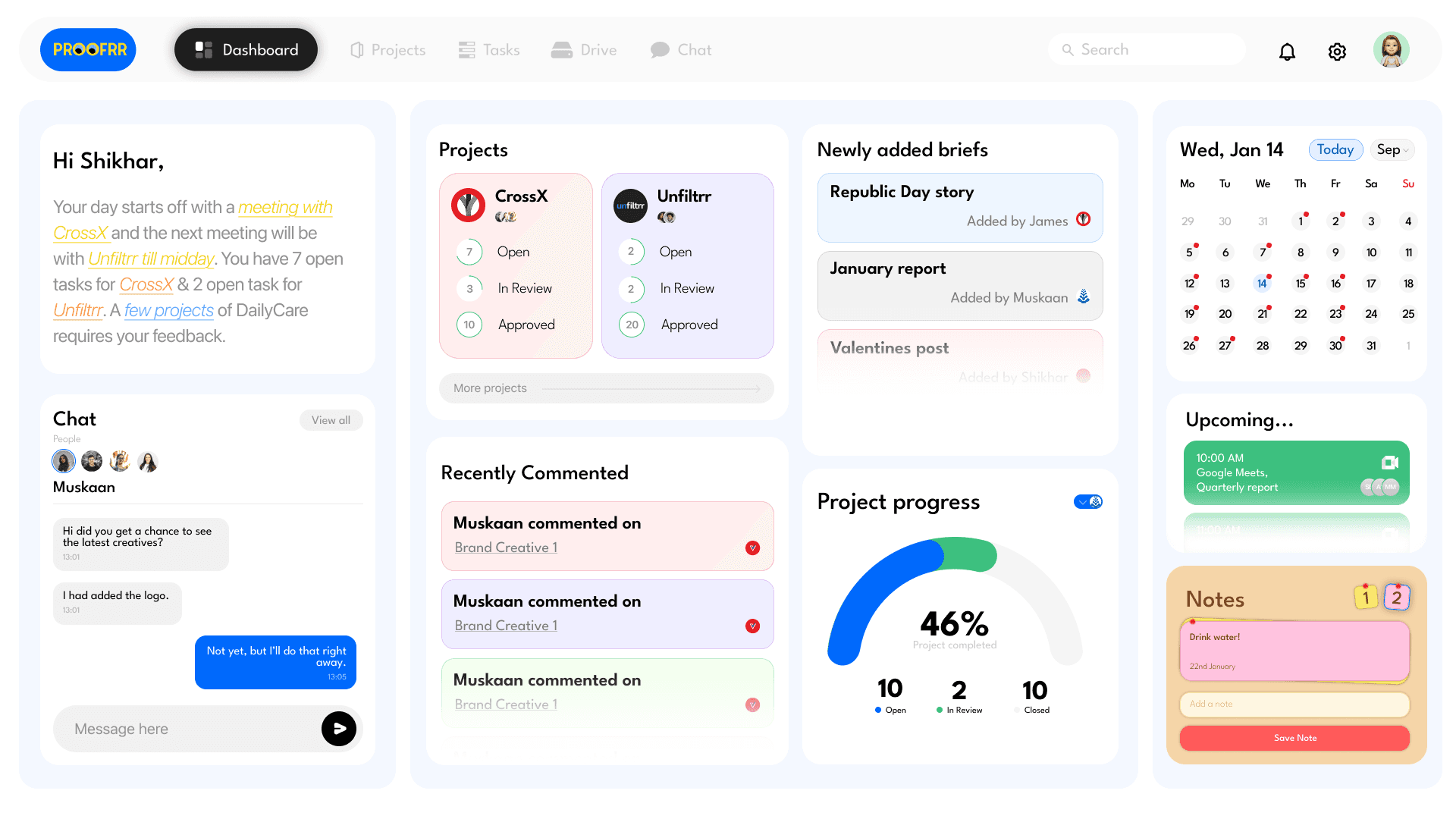
Proofrr was built specifically for the kind of creative collaboration that breaks down in email threads and chat apps. Every review happens in a structured workspace where all contextual feedback lives directly on the asset, all stakeholders can be added to a project with a single link (no login required for clients), and every approval is logged with a clear timestamp.
When a client approves in Proofrr, there's no ambiguity about what they saw or what they agreed to. And when they come back with "just one more change," you have a clear, shared record to reference — professionally, not defensively.
It doesn't eliminate revision requests entirely. But it makes the genuine ones easier to manage, and the unreasonable ones much easier to address.
A Simple Framework Before Your Next Project
While you're getting the right tooling in place, here are four things you can do right now to reduce post-approval revision requests:
- Specify who needs to approve before the review starts — not just who the main contact is, but every stakeholder whose opinion will matter at the end.
- Set a review deadline, not just a delivery deadline. Open-ended reviews invite casual, non-committal feedback.
- Ask for written approval, not a verbal one. A message, an email, or an in-platform sign-off — something that exists outside someone's memory.
- Summarise what was approved after sign-off. A one-line recap ("You've approved V3 of the campaign banner, dated 20 March") shared back to the client closes the loop in a way that a thumbs-up emoji never does.
These steps don't require new software. But combined with a proper online proofing platform, they change the approval dynamic entirely.
The Bottom Line
Post-approval revision requests aren't a personality problem — they're a process problem. Clients come back with changes because the original review was too informal, too rushed, or too fragmented to produce a genuine commitment.
The fix isn't to fight harder after the fact. It's to build a creative approval process that makes the approval itself mean something — with the right context, the right stakeholders, and a clear record everyone can point to.
That's what turns "approved" into actually approved.